
The most hardworking surface in your home isn't your kitchen worktop or your hallway floor; it's your bathroom ceiling. It's constantly under attack from rising steam and high humidity, which often leads to the dreaded sight of peeling paint and recurring black mould. If you're tired of the mess and cost of frequent repainting, exploring modern bathroom ceiling cladding ideas is the smartest move you can make for your home's interior.
We understand that you want a space that looks beautiful without demanding hours of scrubbing or maintenance. This guide will show you how to transform your bathroom with stylish, waterproof cladding that eliminates mould and reduces upkeep whilst enhancing your overall design. We'll explore various materials and textures to help you decide if cladding suits your specific layout, moving you one step closer to a domestic transformation that prioritises your peace of mind. By the end of this article, you'll understand how this professional solution provides a premium finish that traditional plaster simply cannot match.
Key Takeaways
- Eliminate the recurring cost and mess of repainting by choosing moisture-resistant panels that actively prevent mould growth.
- Explore various bathroom ceiling cladding ideas including high-gloss finishes and boutique textures that bounce light and create a sense of space.
- Understand how tongue and groove technology creates a watertight seal whilst providing a seamless, modern alternative to traditional plaster.
- Identify the practical benefits of professional installation, from ensuring a level sub-frame to seamlessly integrating new LED lighting.
- Learn why a bespoke design consultation is the best way to visualise how these materials will suit your specific bathroom layout and local housing style.
Why Bathroom Ceiling Cladding is the Smart Alternative to Plaster
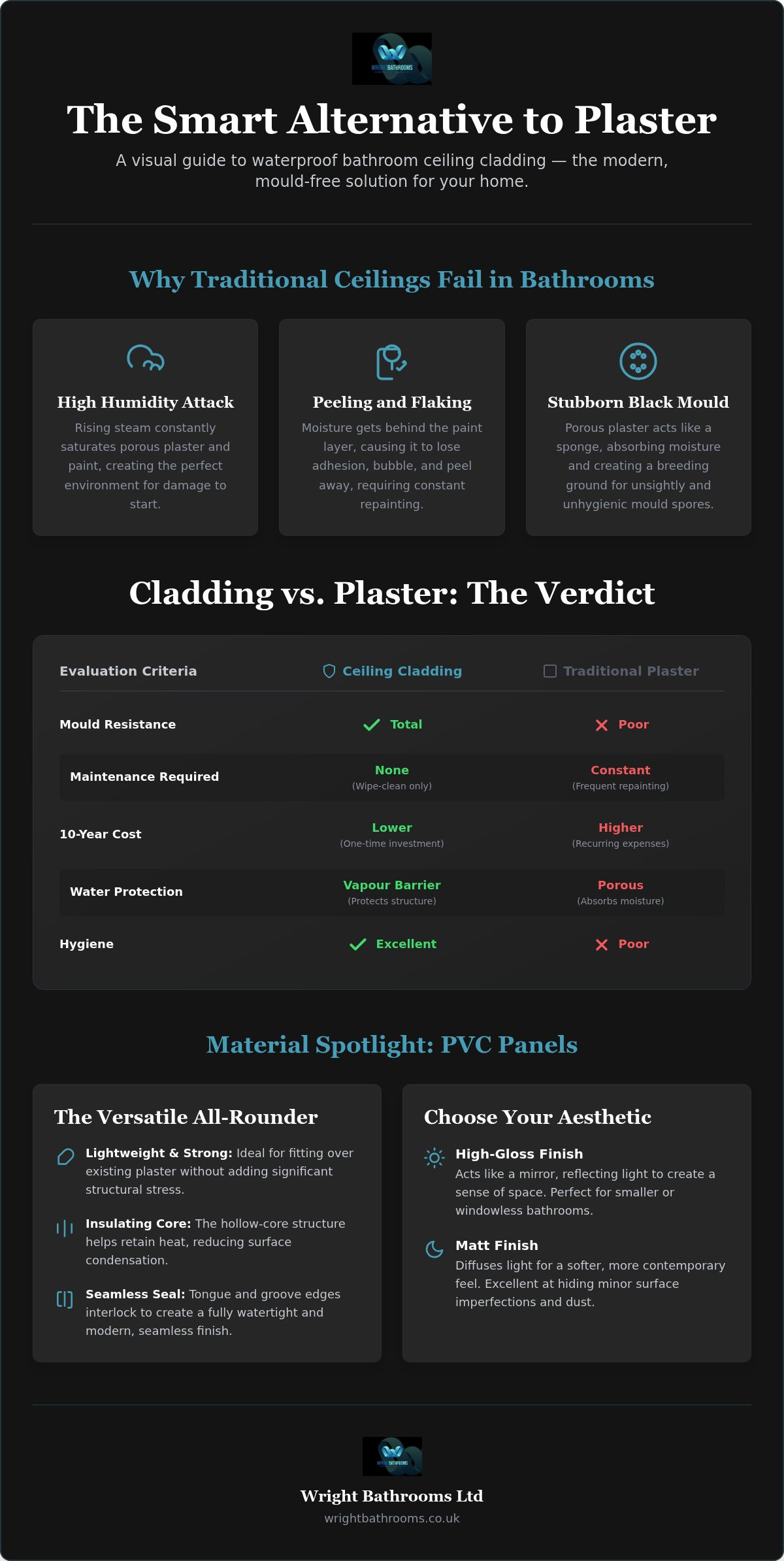
Bathroom ceiling cladding consists of waterproof panels designed to either over-board existing surfaces or replace traditional plaster entirely. While cladding (construction) is a broad term often associated with building exteriors, its application inside the home is a practical masterstroke for high-humidity environments. Unlike plaster, which is naturally porous and prone to cracking over time, these panels create a permanent vapour barrier. This protective layer ensures that steam cannot reach the structural timber joists above, protecting your property's bones whilst delivering a crisp, modern finish. Many homeowners now prioritise bathroom ceiling cladding ideas that offer a "fit and forget" solution, finally ending the frustrating cycle of repairing damp patches and flaky paint.
The Battle Against Bathroom Mould and Humidity
Physics dictates that condensation always rises to the highest point in the room. In a typical bathroom, steam settles on the ceiling and saturates traditional paint. Even specialist moisture-resistant paints eventually fail, leading to peeling flakes and the growth of stubborn black mould. Plaster acts like a sponge; it absorbs humidity and creates a breeding ground for spores. A non-porous cladding surface is fundamentally more hygienic. Because the material is wipe-clean and doesn't absorb water, mould has nowhere to take root. This keeps your sanctuary feeling fresh and clean with minimal effort, as moisture simply sits on the surface until it's cleared by your extractor fan or an open window.
Comparing Costs: Cladding vs. Regular Maintenance
The true value of a renovation isn't just the day-one price, but the cost of ownership over a ten-year period. Plastered ceilings often need repainting every two or three years to mask water stains or peeling. When you calculate the recurring cost of premium paint, brushes, and your own time, the "cheaper" option becomes surprisingly expensive. Cladding is a one-time investment that completely eliminates these maintenance tasks. It's a sophisticated addition that brings a sense of permanence to a professional bathroom installation Coventry. By opting for a durable, high-quality panel, you remove the mess and dust of future repairs. Exploring different bathroom ceiling cladding ideas can help you find a style that balances high-end aesthetics with genuine long-term savings.
Exploring Materials: PVC, Acrylic, and Decorative Finishes
PVC has undergone a remarkable transformation. Modern manufacturing now allows for high-definition textures that mimic natural materials with stunning accuracy. These aren't the brittle, yellowing strips of the past. Today's bathroom ceiling cladding ideas focus on depth, realism, and longevity. Most panels utilise a sophisticated tongue and groove system. This design creates a tight, interlocking fit that ensures a watertight joint across the entire surface. It's an essential feature to control moisture in your home, as it prevents steam from bypassing the surface and reaching the structural elements above.
Choosing between a matt or gloss finish depends largely on your existing lighting setup. High-gloss panels act like a mirror, reflecting light back into the room. This is a brilliant choice for windowless bathrooms or small en-suites where you want to maximise the sense of space. Matt finishes offer a softer, more contemporary feel. They diffuse light evenly and are excellent at hiding minor surface imperfections or dust. To add a touch of structure, many homeowners use "in-fill" strips in silver or chrome. These thin inserts sit between the panels to define the ceiling's geometry, adding a boutique hotel aesthetic that feels both structured and sophisticated.
PVC Ceiling Panels: The Versatile All-Rounder
PVC remains the most popular choice for several reasons. It is incredibly lightweight, which makes it the ideal material for over-boarding an existing plaster ceiling without adding significant structural stress. These panels feature a hollow-core structure. This design provides natural insulation, which helps to retain heat and reduce the risk of surface condensation. Panels are available in various widths to suit different room sizes. Selecting wider panels helps to minimise visible seams in larger family bathrooms, creating a smoother, more expansive appearance that draws the eye upward.
Specialist Finishes: Wood Effect and Marble Textures
If you're aiming for a specific interior style, specialist finishes provide endless creative potential. You can achieve a warm, "Scandi-spa" look with waterproof wood-effect cladding. This allows you to introduce the organic texture of timber without the risk of rot or warping. Marble-effect panels are another favourite, often used to create a cohesive, wrap-around look when matched with similar wall tiling. For those seeking a truly minimalist finish, large-format acrylic panels offer a sleek, joint-free appearance that suits ultra-modern layouts. If you are unsure which material best suits your space, booking a bathroom design consultation can help you visualise these textures in your own home before making a final decision.
7 Bathroom Ceiling Cladding Ideas for Modern Homes
Cladding is no longer just a budget-friendly DIY fix; it has evolved into a strategic design tool used by professionals to create high-end interiors. When you move beyond the basics, you'll find that bathroom ceiling cladding ideas can fundamentally change how a room feels. Experts often suggest looking for beautiful and functional bathroom ceiling ideas that combine durability with visual impact. At Wright Bathrooms Ltd, we frequently integrate these styles into our full-scale renovations to ensure a seamless, premium finish that lasts for decades.
- The High-Gloss "Mirror" Effect: Using gloss white panels is a masterstroke for small en-suites. The reflective surface bounces light from spotlights or windows, making the room feel significantly taller and more airy.
- The Boutique Hotel Look: Integrated silver or chrome strips between panels provide a structured, architectural feel. This mimics the sophisticated ceilings found in luxury spas and hotels.
- Scandinavian Spa: Pair light oak-effect cladding with minimalist black fixtures. This introduces the warmth of wood without the maintenance headaches of real timber.
- Monochrome Contrast: For a bold statement, use dark grey or slate-textured panels. When set against crisp white wall tiles, a dark ceiling adds depth and a sense of "soft luxury."
Creative Layouts: Beyond Standard Parallel Lines
The way you orient your panels can trick the eye and improve your room's proportions. Installing cladding diagonally is a brilliant way to make a narrow bathroom feel wider, as the lines lead the eye to the corners rather than the walls. You can also create a dedicated "feature zone" by using a different texture or colour directly above the shower or bath area. This helps to define the space and adds a layer of customization. Beyond aesthetics, cladding is incredibly practical for hiding unsightly structural beams or complex pipework that often ruins the clean lines of a traditional plastered ceiling.
The Minimalist White-Out
If you prefer the classic look of plaster but want to avoid the mould, matt white cladding is the perfect "stealth" replacement. It provides a perfectly flat, uniform finish that won't crack over time, even in houses prone to slight movement. This simple, clean backdrop allows you to experiment with bold modern bathroom design ideas elsewhere in the room, such as vibrant tiling or statement brassware. Our team at Wright Bathrooms Ltd can help you select the exact width and finish to ensure your new ceiling complements your layout whilst providing the maintenance-free peace of mind you deserve.
Practical Considerations: Installation, Lighting, and Maintenance
Deciding whether to install over your existing ceiling or strip back to the joists depends entirely on the condition of your current plaster. If the surface is solid but just unsightly, over-boarding is a brilliant way to implement bathroom ceiling cladding ideas without the mess of demolition. However, if there's significant damp or structural damage, stripping it back allows for a fresh start. Regardless of the route, a level sub-frame is vital. Without a perfectly flat timber or metal grid, your panels will follow the curves of a wonky ceiling, ruining the flush, premium look you're aiming for.
Maintenance is where cladding truly shines compared to paint. You don't need specialist chemicals; a simple mix of warm water and a mild detergent is usually enough to keep the surface pristine. Avoid abrasive pads that might scratch the decorative finish. Because the material is non-porous, you can simply wipe away surface condensation before it has a chance to cause issues. This ease of care is a primary reason why modern bathroom ceiling cladding ideas have become so popular for busy family homes.
Lighting Integration and Electrical Safety
LED spotlights are the ideal partners for PVC panels. They run much cooler than old halogen bulbs, which is crucial when dealing with plastic-based materials. Safety is paramount, so ensure your installer uses fire-rated downlights. According to UK regulations, you must use the correct Ingress Protection (IP) ratings for different areas. For example, lights directly above a shower (Zone 1) require a minimum of IP65, whilst Zone 2 areas, which extend 0.6m around the bath or shower, need at least IP44. Cladding makes hiding the necessary wiring effortless, but a professional should always handle the electrical connections to ensure compliance with Part P regulations.
Professional Fitting vs. DIY
While the boards themselves are easy to handle, the difference between a DIY job and a professional finish lies in the precision of the details. Poorly executed trimming leads to unsightly gaps at the edges, which can harbour moisture and ruin the aesthetics. A professional installer ensures the perimeter is perfectly finished with colour-matched coving or quadrant trims. Booking a professional bathroom design consultation ensures your ceiling layout perfectly aligns with your lighting plan and suite orientation. If you're ready to upgrade your space, you can book a consultation with Wright Bathrooms Ltd to discuss your specific layout and technical requirements.
Designing Your Dream Bathroom in Coventry
At Wright Bathrooms Ltd, we believe that a ceiling should never be an afterthought. While national retailers often treat panels as a simple commodity, our approach integrates bathroom ceiling cladding ideas into a cohesive, total suite renovation. We don't just fix boards to a frame; we curate a space where the ceiling, lighting, and wall textures work in perfect harmony. By choosing a design-led installation, you avoid the "cheap" or "plastic" look sometimes associated with poorly executed DIY projects. Instead, you gain a sophisticated, moisture-proof finish that enhances the value and feel of your home.
Our team understands that every property in the West Midlands has its own character. Whether you're modernising a Victorian terrace in Earlsdon or updating a contemporary detached home in Finham, we tailor our technical execution to suit the specific structural requirements of your building. This local expertise ensures that your renovation isn't just beautiful on day one, but remains durable and mould-free for years to come. We take pride in our meticulousness, ensuring that every joint is seamless and every trim is perfectly aligned with your chosen aesthetic.
Our Local Expertise in the West Midlands
Choosing a Coventry-based specialist means you benefit from a partner who is deeply invested in personal accountability. We manage the entire project from the initial concept to the final spotlight fitting, removing the stress of coordinating multiple trades. Our focus is always on high-quality craftsmanship and premium aesthetics. We don't settle for "good enough"; we strive for a level of precision that only a skilled artisan can provide. This comprehensive service includes:
- Full-scale bathroom design and professional installation.
- Expert integration of moisture-resistant cladding with bespoke lighting plans.
- Project management that respects your home and your schedule.
- Access to high-definition textures and finishes that national chains rarely stock.
Book Your Bespoke Design Consultation
Visualising how different bathroom ceiling cladding ideas will look in your specific layout can be a challenge. That's why our expert design consultations are the foundation of every project we undertake. We help you see the potential of your space through detailed plans, allowing you to choose textures and colours with total confidence. There's a unique peace of mind that comes with working with a family-run, professional service that prioritises your satisfaction over high-volume sales.
If you're ready to transform your bathroom into a maintenance-free sanctuary, the journey starts with a conversation. We invite Coventry homeowners to take the first step towards a stunning, mould-free interior. You can book a design consultation with our team today to explore our range of premium finishes and discover how we can bring your vision to life with the care and expertise your home deserves.
Take the Next Step Towards a Mould-Free Sanctuary
Choosing a waterproof, modern alternative to plaster is more than just a practical fix; it's a strategic design decision that protects your home whilst elevating its aesthetic. By exploring various bathroom ceiling cladding ideas, you've seen how high-definition textures and integrated lighting can turn a functional necessity into a stunning interior feature. From the hygienic benefits of non-porous surfaces to the sophisticated look of boutique hotel finishes, cladding offers a permanent solution to the recurring stress of peeling paint and black mould.
As a Coventry-based family business, Wright Bathrooms Ltd specialises in high-quality bathroom fitting with full project management from design to completion. We handle every detail, ensuring your renovation is seamless and prioritises your peace of mind. If you're ready to visualise these materials in your own space, we invite you to book your professional bathroom design consultation with our expert team today. Let's work together to create a beautiful, durable bathroom that you'll be proud of for years to come.
Frequently Asked Questions
Is bathroom ceiling cladding better than plaster?
Cladding is functionally superior to plaster in high-humidity environments. Traditional plaster is porous and acts like a sponge, which leads to paint failure and recurring mould. Cladding is non-porous and creates a permanent vapour barrier that protects your structural joists. It eliminates the need for repainting every few years, making it a much more durable and cost-effective solution for a busy family bathroom over a ten-year period.
Can I install spotlights into PVC ceiling panels?
You can easily integrate LED spotlights into your panels for a sleek finish. It's vital to use LED bulbs because they produce very little heat compared to older halogen alternatives. You must also ensure your installer uses fire-rated downlights to maintain the safety integrity of the ceiling. Cladding provides a brilliant way to hide all necessary wiring whilst keeping the cables accessible for any future maintenance needs.
Will bathroom cladding make my room feel smaller or lower?
The right bathroom ceiling cladding ideas can actually make a small room feel significantly larger. High-gloss white panels reflect light, which creates an airy and open feel in windowless en-suites. While the panels and sub-frame add a few millimetres of depth, the visual impact of a crisp, uniform surface usually makes the ceiling look higher. Wider panels help by reducing visible seams, expanding the space visually for a premium look.
How do you clean bathroom ceiling cladding without scratching it?
Cleaning your ceiling is straightforward and only requires a soft microfibre cloth and warm, soapy water. Don't use abrasive scouring pads or harsh chemical cleaners, as these can dull the decorative finish over time. Most surface dust or condensation marks wipe away with minimal effort. Because the material is non-porous, you won't ever need to scrub at stubborn mould spores like you would with a traditional plastered and painted surface.
Can I install cladding directly over my existing plaster ceiling?
Over-boarding is a very common practice if your existing plaster is structurally sound and secure. If the surface is relatively level, you can fix the panels directly to it using specialist adhesive or a thin timber sub-frame. This method avoids the mess and dust associated with a full ceiling rip-out. However, if the old plaster is crumbling or shows signs of significant damp, we recommend removing it first to ensure a flat finish.
Is bathroom ceiling cladding fire-rated and safe?
Most high-quality PVC panels carry a Class 1 fire rating, which means they are resistant to the spread of flames. They are specifically designed for domestic use and meet all necessary safety standards for home renovations. When installed by a professional with the correct fire-rated downlights, they provide a safe and reliable solution. Always check the specific manufacturer's rating during your design consultation to ensure the materials meet your property's specific requirements.
How long does bathroom ceiling cladding typically last?
You can expect high-quality cladding to last between 10 and 20 years with very little maintenance. Unlike paint, which flakes, or plaster, which can crack due to house movement, PVC is a resilient material that doesn't rot or warp. It remains completely waterproof throughout its entire lifespan, making it a permanent fixture in your home. This longevity makes it a much more sustainable choice than the constant cycle of repairing and repainting plaster.
Does cladding prevent mould from growing in the bathroom?
Cladding is exceptionally effective at preventing mould growth on the ceiling surface. Mould requires a porous surface and organic material to grow; PVC provides neither. While you still need a good extractor fan to manage overall humidity, the ceiling itself will remain clean and hygienic. This is a massive advantage over traditional plaster, which frequently harbours black mould spores that are difficult to remove once they have taken root in the paint.


